In a recent conversation hosted by RSF, leaders from Equal Exchange, Purpose Trust Ownership Network, and Organically Grown Company explored a question that sits at the heart of regenerative finance: Who is business for? Is it designed to maximize returns for distant shareholders—or to nourish workers, farmers, communities, and the ecosystems that sustain us?
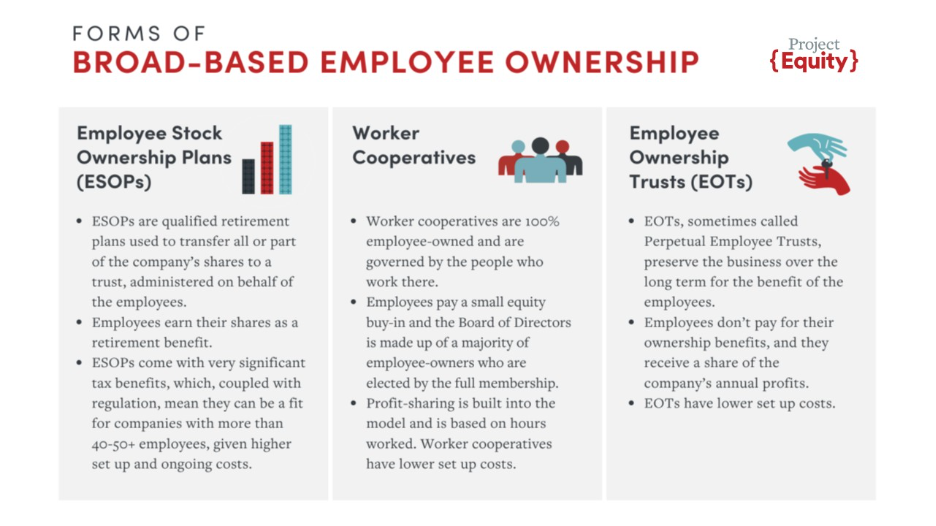
In this conversation, our panelists outlined several different forms of alternative ownership. They explored how alternative ownership has helped distribute power and profit more equitably across their organizations. And they got to the heart of why the “how” we do business is just as important as the “what.”
Read on for five big takeaways from the conversation – and tips for how you can get involved in the alternative ownership economy.
Takeaway #1: Ownership isn’t neutral. It’s a design choice.
When someone founds a business or a nonprofit, they actually have quite a few options for how they set it up. Those early choices about ownership matter.
Take a look at the three types of alternative ownership laid out above. They offer clear pathways to bring a greater share of power and profit to employees. Yet many founders forego these models, either not knowing about these models or willfully avoiding them, and choose structures that consolidate power among a select few or outsource it to external shareholders. That early choice – often not perceived as an active decision – contributes to a system that is inherently unequal.
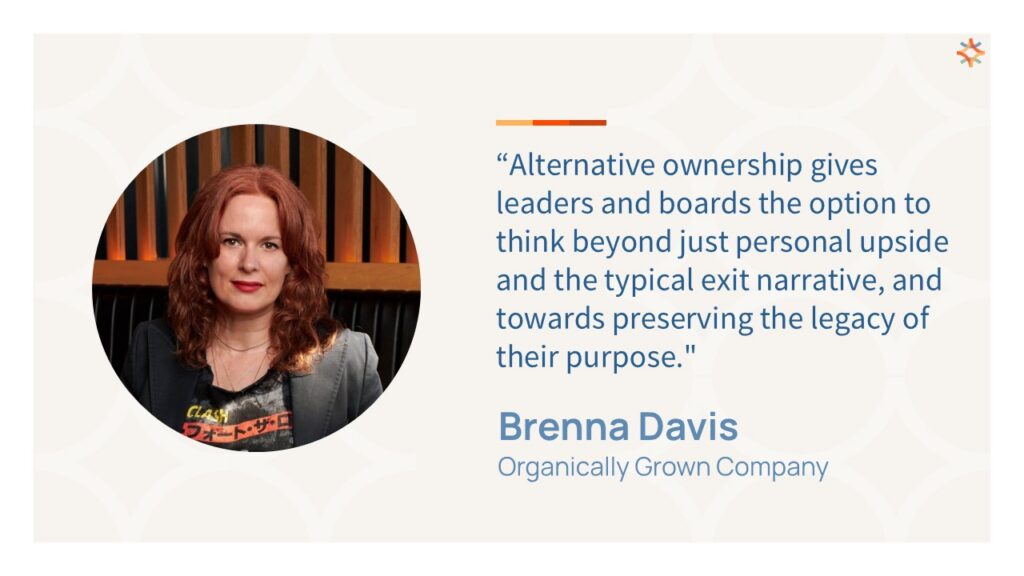
Brenna Davis, CEO of Organically Grown Company (OGC), encourages business and nonprofit leaders to recognize that ownership structures aren’t neutral – and to choose options that have a positive impact. OGC is owned by a purpose trust that holds them accountable to their mission while maintaining their independence – forever.
“Alternative ownership gives leaders and boards the option to think beyond just personal upside and the typical exit narrative, and towards preserving the legacy of their purpose,” Brenna says.
Takeaway #2: Alternative ownership isn’t radical. The status quo is.
Because it’s a new concept to many of us, it’s natural to think of alternative ownership as radical. But in fact, many forms of ownership that we now think of as “alternative” have been around for a long time.
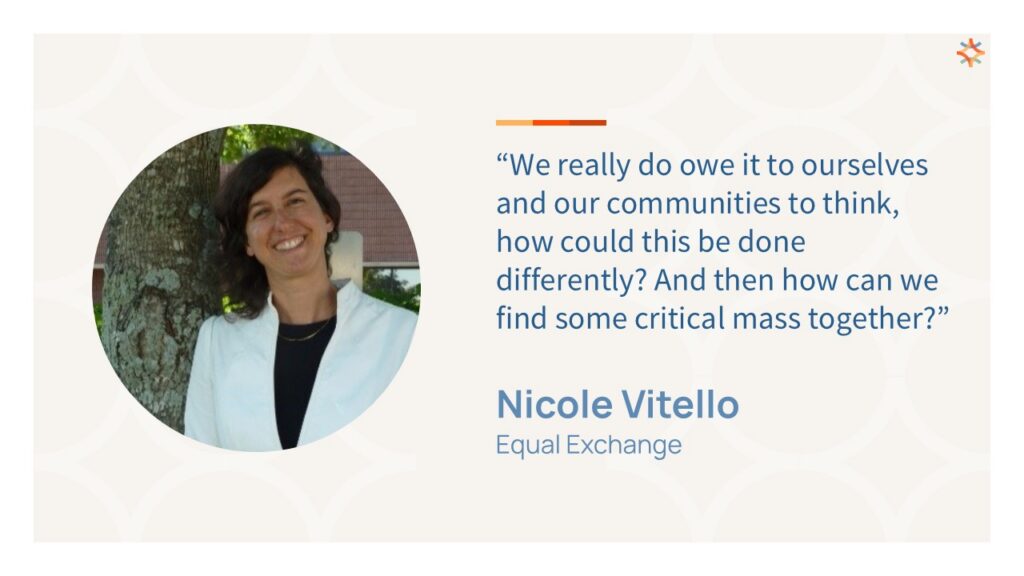
“Farmers banding together into co-ops,” says Nicole Vitello, Vice President at Equal Exchange, “is a very, very basic concept borne out of necessity,” In many cases, the farming cooperatives Equal Exchange sources from are rooted in generations of tradition – and amplified by the need to band together to gain power in a globalized system that’s stacked against them.
What’s actually radical is the extractive financial system, growing inequality, and increased consolidation that we’ve come to accept as normal. Nicole encourages us to challenge that assumption and imagine a system that’s more equitable. “We really do owe it to ourselves and our communities to think, how could this be done differently? And then how can we find some critical mass together?”
Takeaway #3: To mainstream alternative ownership, we need more education.
All of us acknowledged that alternative ownership is still… well, alternative! But as Nicole said, we don’t want it to feel like a radical, out-there concept. We want it to feel normal.
“There are a lot of leaders that don’t know this model exists, or they think they only work at a small scale,” Brenna says. Her colleagues at Purpose Trust Ownership Network are spreading the word by building a resource library about purpose trusts and employee ownership models. “There’s a directory of businesses that are purpose trust owned…and different documents that run through the types of ownership.” You can access that resource library here.
Equal Exchange has created a network of “citizen-consumers” who organize to put Equal Exchange’s products in stores, spread the word about alternative trade, and even sit on Equal Exchange’s board. They also invest in educating their worker-owners about how cooperatives work.
“When you start at Equal Exchange, you’re here for a year, and then there’s a vote of your co-owners to vote you into the company,” says Nicole. “During that year, you’re going through cooperative education and education about the business. We have monthly staff meetings, open-book financials, so there’s a lot of financial training and other things that go into owning a business with your peers.”
Takeaway #4: To build a regenerative economy, we need regenerative finance.
Alternative ownership is one facet of a regenerative economy – one where money circulates instead of accumulates, contributes instead of extracts, heals instead of harms.
A big part of the reason these models are still “alternative” is because the overwhelming majority of money flows to and through corporations that are owned by disconnected shareholders motivated by profit.
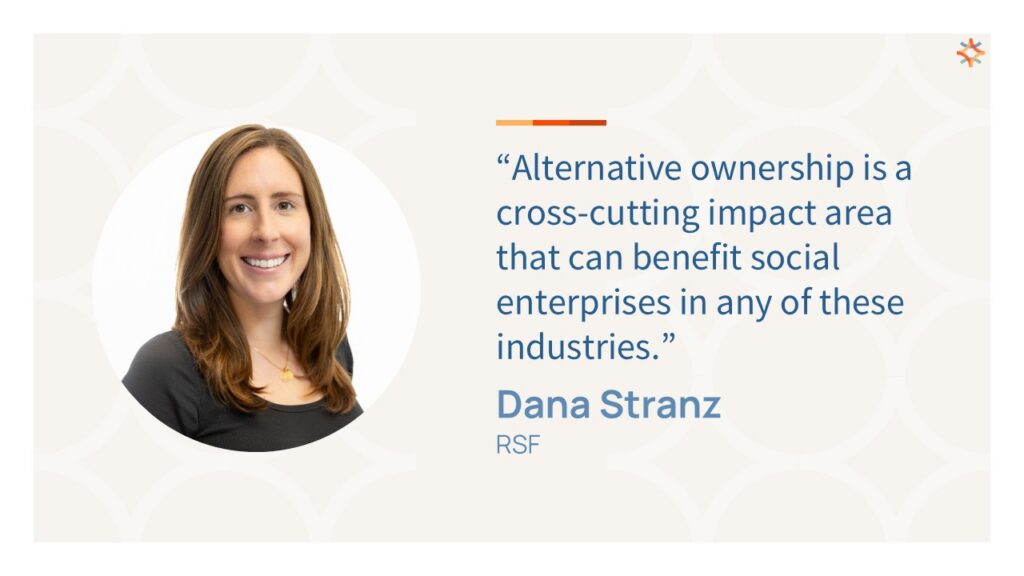
At RSF, we want ownership models like cooperatives and purpose trusts to be mainstream, not marginalized. “Alternative ownership is a cross-cutting impact area that can benefit social enterprises in any of these industries and impact areas,” says Dana Stranz, Chief Risk Officer at RSF.
We seek out organizations with alternative ownership structures that could use our values-aligned financing to grow. In the case of OGC, we actually financed their transition to a new ownership model, because we saw the impact that would create.
“It’s not every day that someone shows up at your door and says, we’re trying this new alternative ownership model, and guess what, loan us millions of dollars to do it,” Brenna says. “You worked with us through the process to support the diversity of food systems.”
Takeaway #5: You don’t have to be a business owner to get involved in the alternative ownership economy. You can start today!
At the end of our panel, Brenna and Nicole offered a few examples of alternative ownership in action – and ways that anyone could get involved.
“You can join a local food co-op and become a member of that,” says Nicole. “There’s a lot of real community investment out there. There are real estate co-ops. There are different community bonds and other things that allow you to literally invest your money in your community. And it’s not as hard or inaccessible as you would think.”
“If you’re an executive or a board member, exploring transitions is worth bringing up,” Brenna continues. “For folks that are in the consulting world or practitioners or advisors, learn about these structures and make them accessible and understandable. And as investors, choosing to have patient capital benefits the world and the legacy you’re leaving behind.”
Want to dive deeper into the world of alternative ownership?