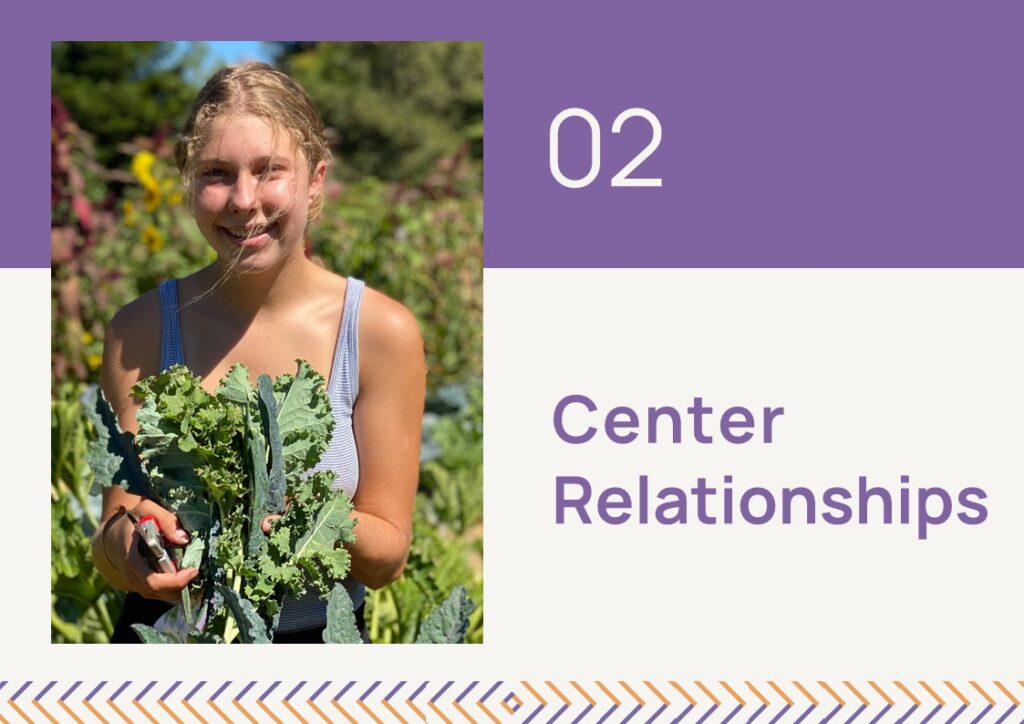
This blog series breaks down each of the five principles that guide our work in regenerative finance. Here, we’re covering the second: Center Relationships.
Conventional financial wisdom dictates that economic life is fundamentally built around competition. The more competition, the more wealth. Every person for themselves. Whoever has the most, wins.
But look where this has gotten us: exorbitant bank fees, predatory lending practices, the 2008 financial crisis. Ruthless competition and mercenary thinking only alienates us – from each other, from nature, and from ourselves.
What would it look like if relationship – not competition – was the central tenet of finance? RSF’s relationship with Sebastopol Charter School (SCS) exemplifies how this relationship-based form of finance could work.
SCS provides students with the depth, beauty, and rigor of a private school guided by the core principles of Waldorf education, but without the tuition that is a barrier for many families. Students receive a deep education on land stewardship and environmentalism, with a curriculum that includes regenerative agriculture principles. It’s part of students’ daily practice to compost, recycle, and use sustainable and renewable materials.
From its humble origin in a church basement in 1995, the California K-8 institution has grown to serve 283 current students on a 20-acre campus. In 2016, it became the nation’s first accredited public Waldorf school through the Alliance for Public Waldorf Education. But that growth was not always assured. SCS traveled a long road to get to this place, and more than $7.5 million in relationship-based finance from RSF over two decades were essential to its progress.
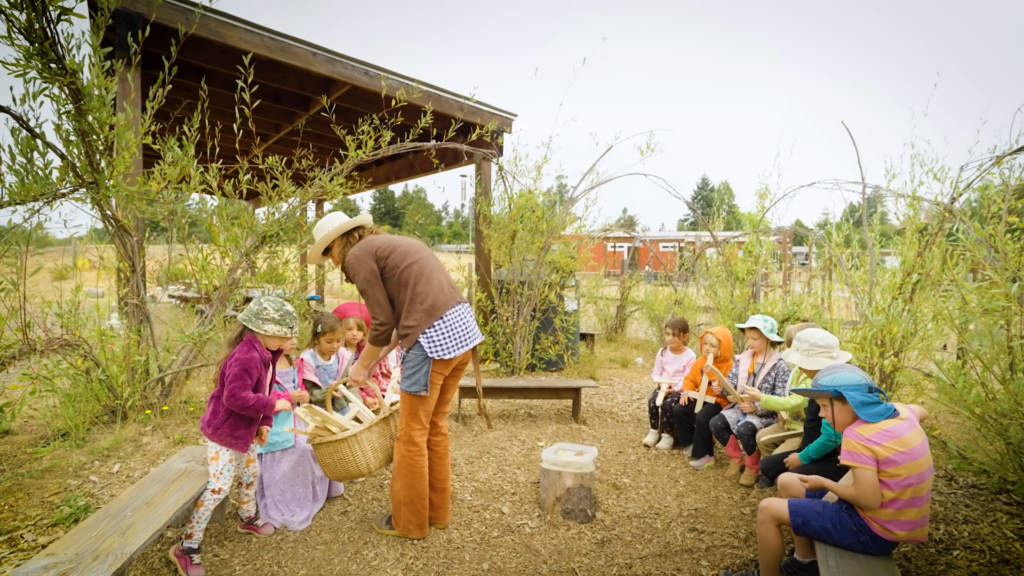
A $1.65 million mortgage loan in 2000 to the Charter Foundation, the nonprofit funding body that supports the school, helped SCS move out of cramped rental spaces and construct its first campus in downtown Sebastopol. The new campus worked well for more than a decade, and within that time the Charter Foundation paid off its entire loan. But administrators dreamed of creating communal spaces where students could gather and play instead of relying on the public park across the street.
In 2013, the Charter Foundation approached RSF again, this time for a $3.6 million loan to purchase a 20-acre property just north of the initial campus. The money covered the land purchase, classroom construction, utilities installation, and renovations to an existing building, which now serves as administrative offices. Because of the strong relationship it had built with SCS, RSF agreed to continue financing the school with a $2 million bridge loan. It also adjusted the existing loans to terms and rates that better served the school’s growth plan – changes that a more transactional financial partner likely wouldn’t have agreed to.
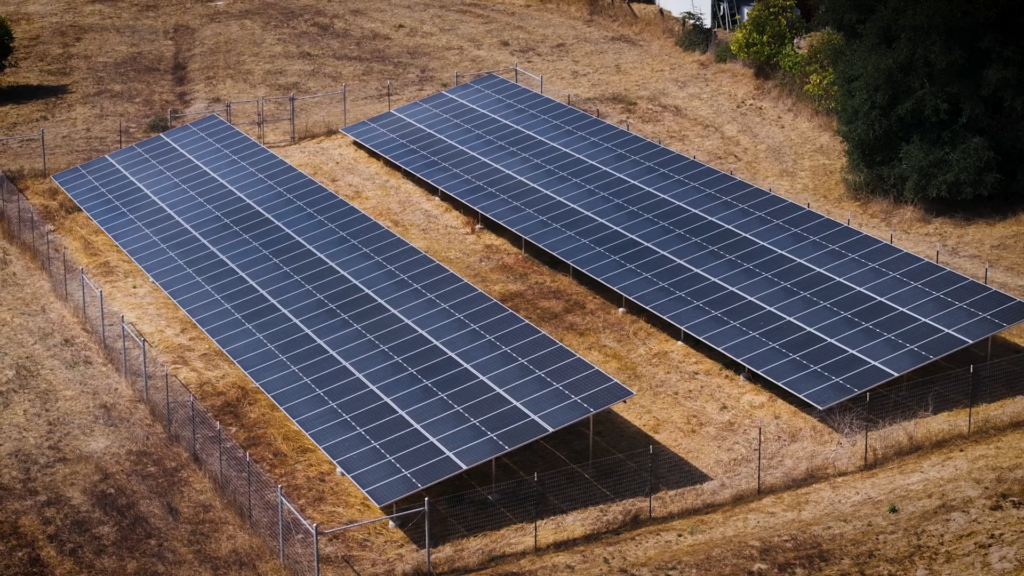
The last wave of funding from RSF came in 2022, when the Charter Foundation requested $220,000 to install solar panels and convert fully to renewable electricity, deepening the school’s environmental commitment and reducing its utility bills. “The school’s long relationship with RSF has allowed it to grow at a pace that makes sense,” says Essie Bishop, who at the time was the Charter Foundation’s administrative director and now works at RSF.
Bishop goes on to describe how a financial partnership rooted in relationship looks different from one with a traditional bank – and how that form of finance was what the school needed to grow.
“We have a real relationship with RSF based on mutual understanding and visibility that extends beyond mission alignment and familiarity with Waldorf education values,” Bishop says. “It’s not some blind banking relationship where we’re just a number on a spreadsheet. RSF truly celebrates our accomplishments and proactively supports us by asking about our needs and what we want to achieve.”
Want to center relationships in your own financial practice? Invest with RSF, open a donor-advised fund, or apply for a loan from RSF.