This blog series breaks down each of the five principles that guide our work in regenerative finance. Here, we’re covering the fifth and final principle: Move with Change.
Established financial thinking is inflexible and unfeeling. If circumstances beyond an individual or organization’s control prevent them from paying back a loan exactly on time, meeting a specific growth target, or even sustainably operating at all, traditional financial systems trap them in cycles of debt and false promises.
A regenerative financial system, like the natural world it draws inspiration from, bends – not breaks – with change. In this system, we step back from narrow goals that stipulate “we need this payment, in this exact form, by this exact date,” and instead embrace a more expansive pursuit in which “we want this business to succeed because its existence makes the world a better place.” By doing so, we can shift from an economic system defined by perpetual conflict to one rooted in compassion and shared purpose.
When circumstances affect the market conditions in which our borrowers do business, we change our terms to match. Because we’re not here to extract from the organizations we support; we are investing precisely in their ability to adapt, evolve and thrive. By offering an extension to a loan payment, readjusting terms, or providing additional financing, we can collectively help cultivate resilience and build financial strength.

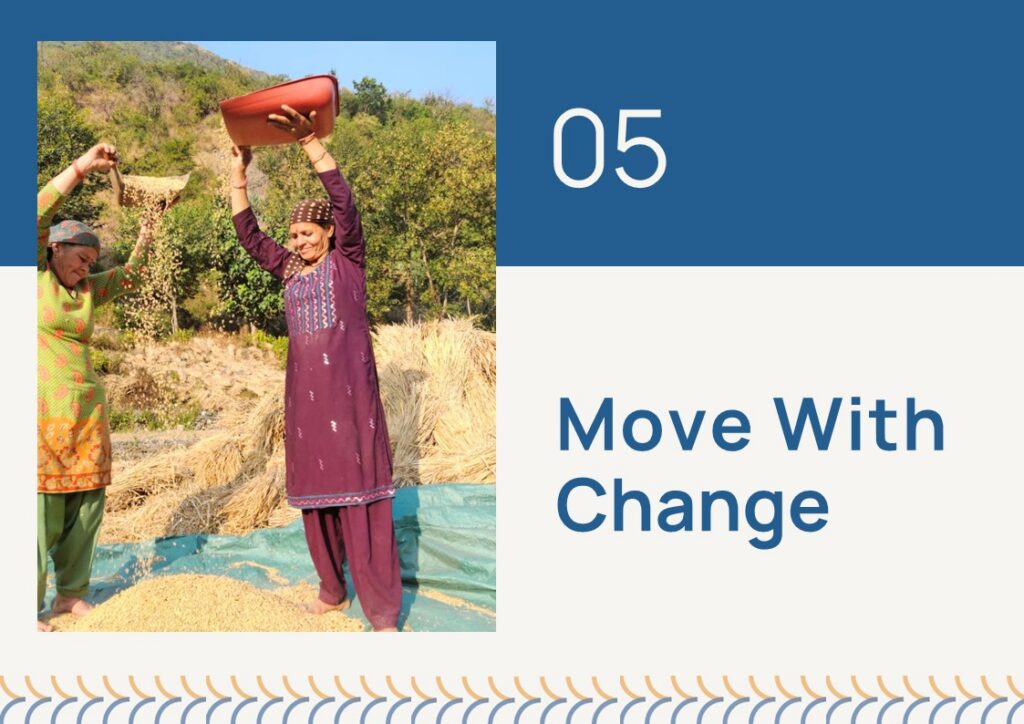
Take Lotus Foods, one of RSF’s longest-term partners. Their mission is simple: to preserve heirloom rice varieties and help small farmers grow those crops in a sustainable way. This rice also uses 50% less water, produces 40% less methane, and requires 90% less seed to produce 2-3x more output. Over the last few decades, RSF has supported Lotus Foods through unprecedented periods of change – a global recession, a global pandemic, a trade war – so that their vital work could continue.
By 2008, Lotus Foods had already had a line of credit with RSF for several years. But when the recession hit, they were starting to struggle. So RSF transitioned their line of credit and helped refinance their more expensive debt with other lenders. This financing helped them push through their challenges, and four years later, we were able to increase their line of credit.

Twelve years later, COVID-19 and volatile trade policies presented a whole other set of significant challenges. Because Lotus sourced 83% of their products from China, they were forced to pay millions of dollars in tariffs as a result of a 25% tariff imposed on Chinese imports in the wake of the pandemic. This far exceeded their pre-pandemic budget. Shipping delays further stressed their liquidity because of longer inventory turnover time.
RSF stepped in by restructuring and increasing their loan, providing Lotus with more permanent working capital. But Lotus needed more support, and the restrictions of our typical borrowing-based line of credit was a hurdle. We encouraged them to raise new equity capital within a certain period of time to complement our debt, and they succeeded. Through collective flexibility, trust, and shared belief, we were both able to rise above the pandemic’s extraordinary challenges.
Conventional finance tries to pretend that change won’t happen. Regenerative finance recognizes that change is inevitable and constant. By honoring that principle, we can practice a form of finance that helps mission-driven organizations move through change, adapt, and thrive.
Want to build a financial practice that moves with change? Invest with RSF, open a donor-advised fund, or apply for a loan from RSF.