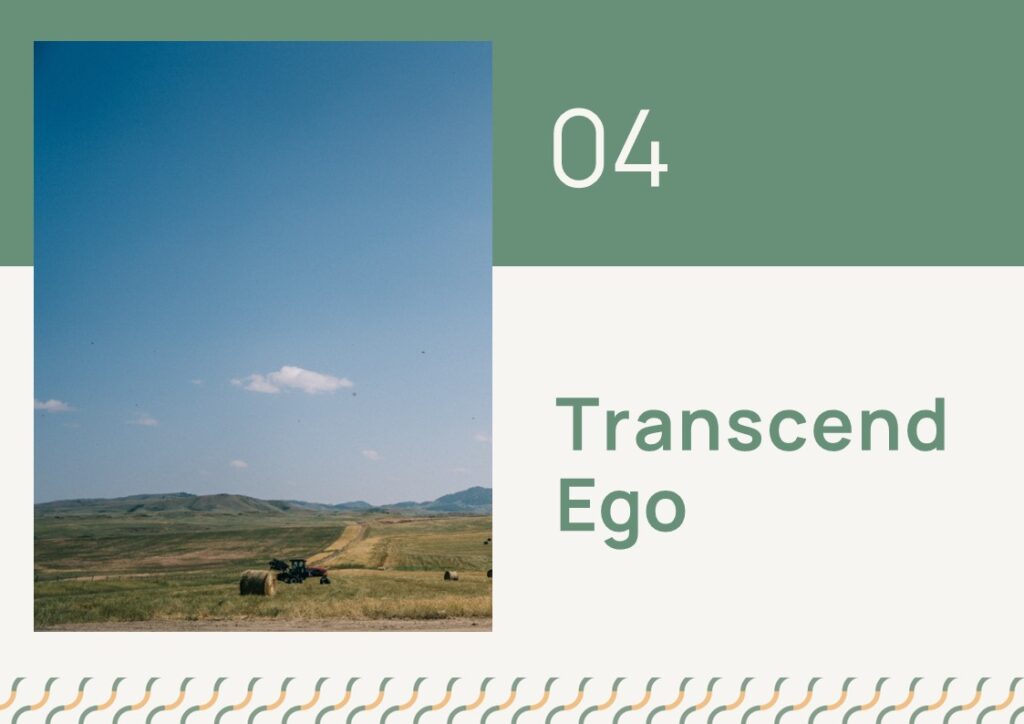
This blog series breaks down each of the five principles that guide our work in regenerative finance. Here, we’re covering the fourth: Transcend Ego.
Conventional economic systems center humans at the expense of other living things and the natural environments we’re a part of. But ecologically speaking, people are no more important than our neighbors on Earth. And if we continue to put ourselves first, by allowing profit to come at the expense of environmental degradation, we will “grow” our way out of existence.
Investing in the planet’s health isn’t a means to an end – it’s a worthy goal in and of itself. And when we invest in the health, preservation, and maintenance of natural ecosystems, it’s not just the living things that live in them that benefit. We do, too — because humans are a part of that living system.
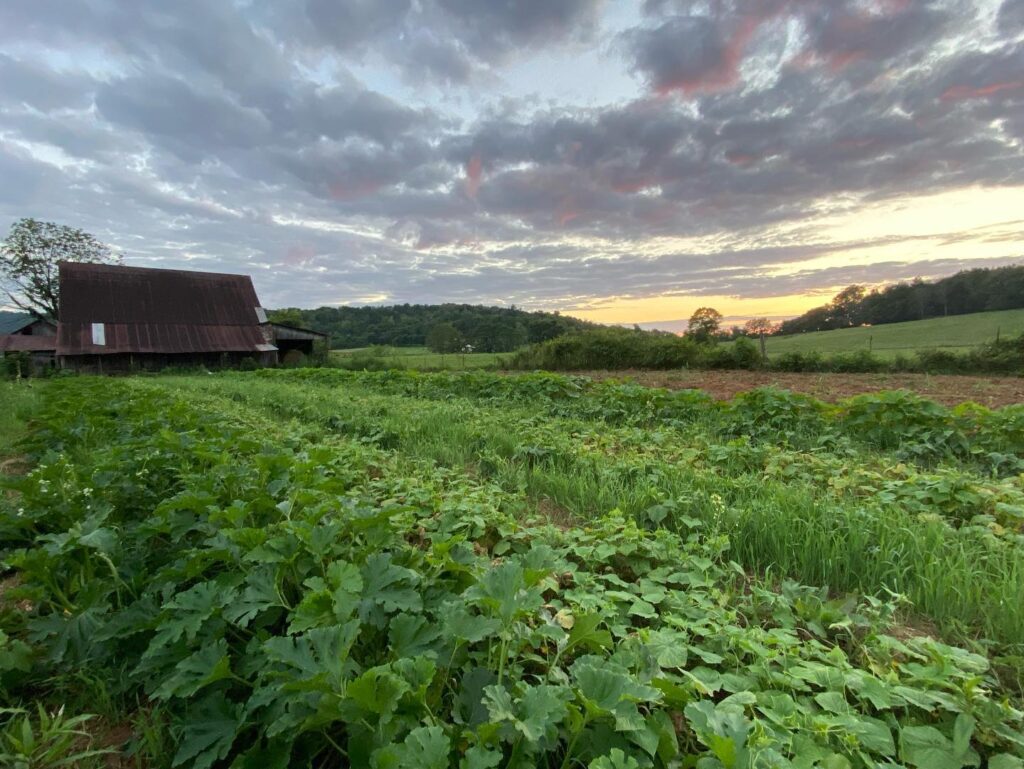
Land trusts purchase land for the express purpose of keeping it off the speculative market, preserving it for anything from affordable housing to environmental conservation. By providing financing that supports these purchases, we can protect our invaluable natural resources from short-sighted, profit-driven speculation, and ensure a diverse and thriving ecosystem – not only for ourselves in this life, but for our descendants and the environment they’ll inherit.
Living Lands Trust embodies this idea by working to keep farmland viable through regenerative land stewardship. Living Lands Trust acquires land through gifts and purchases, then leases that land to farmers, ranchers, and other stewards who are committed to biodynamic agriculture and regenerative practices.
RSF was first introduced to Living Lands Trust in 2013, when they asked us for help purchasing 76 acres of farmland in Wisconsin adjacent to fields already being used for biodynamic agriculture. Gaining this land would be a major boon for the young dairy farmers the trust was already working with, but neither the farmers nor Living Lands Trust had the money to purchase and protect the new plot.
Because RSF understood that regenerative agriculture requires regenerative finance, we supplied them with a loan to buy the land and, perhaps more importantly, demonstrate the viability of their pioneering model.
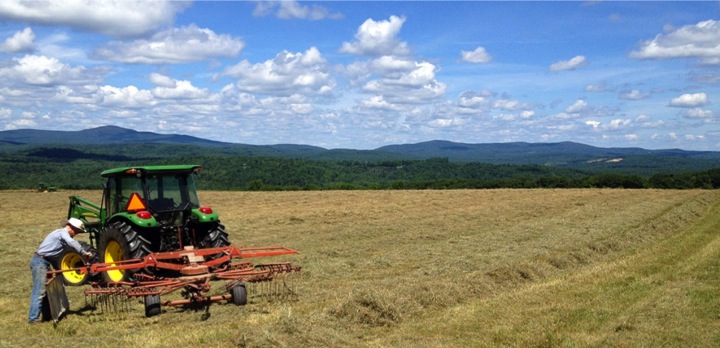
“RSF fully grasps the challenges…They are also operating outside of the way conventional financial institutions work, providing small and innovative organizations access to capital where we would otherwise be excluded,” says David Outman, the Trust’s executive director. “If you’re not taking steps to protect investments that are being made in regenerative agriculture now, you lose them quickly.”
Today, Living Lands Trust holds more than 2,400 acres in southeastern Wisconsin, Northern California, southern New Hampshire, and north-central Texas. And instead of putting our big, human egos and their short-term desires first, they’re ensuring that farmland remains viable for land stewardship practices that provide shared social, ecological, and economic value for generations to come.
Want to build a financial practice that truly empowers everyone in the financial system? Invest with RSF, open a donor-advised fund, or apply for a loan from RSF.